1-415-230-4353

Juniper QFX5130-48C: A Closer Look at 100G Density with 400G Uplinks
By admin on 11 Aug 2026
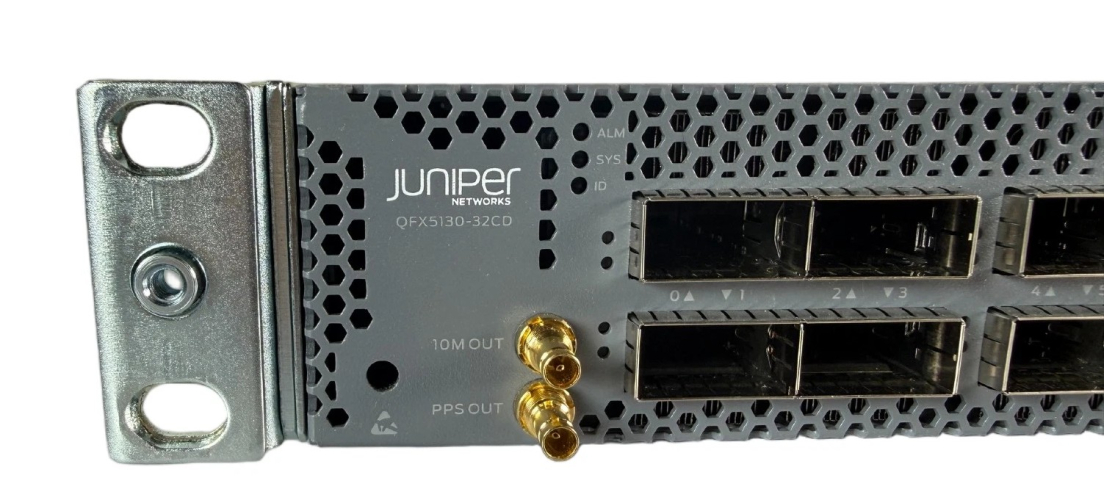
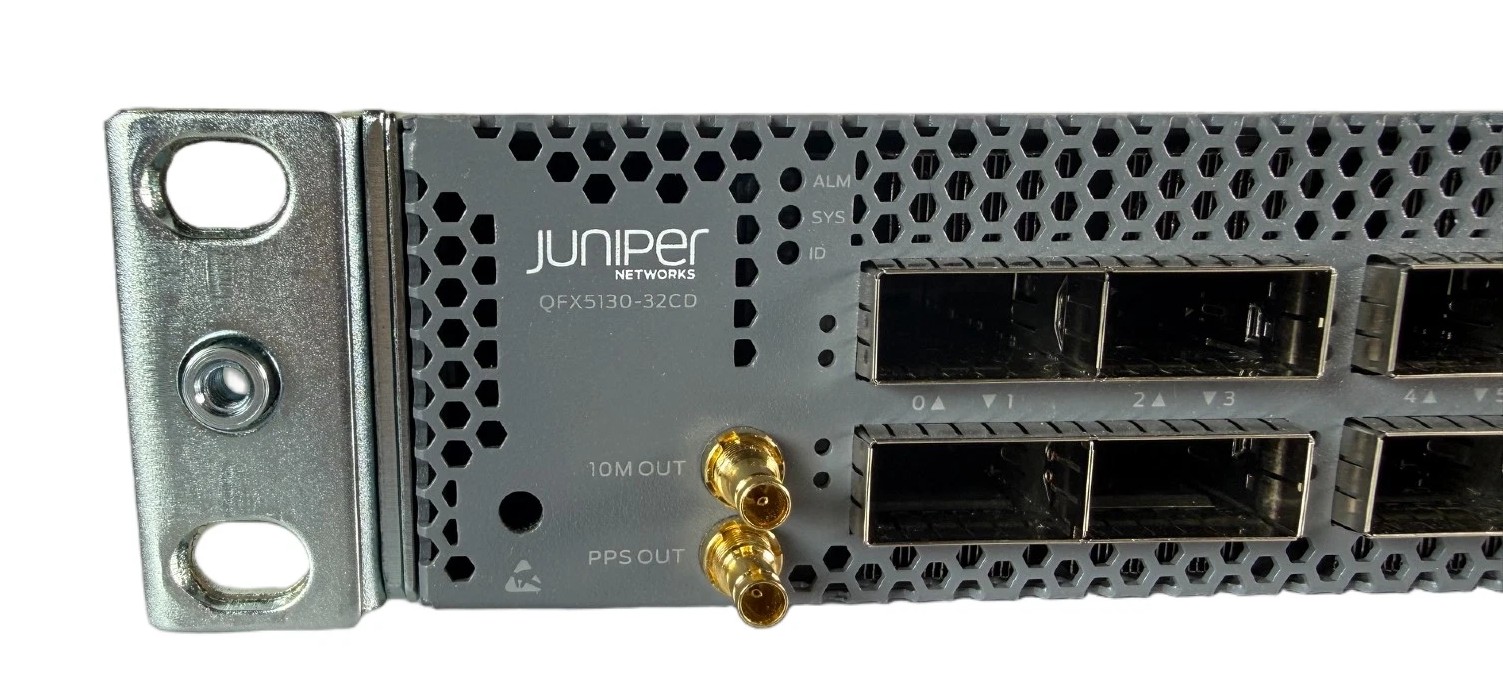
Network speeds keep moving upward, but that doesn't necessarily mean every data center needs to jump straight to the newest generation of switching hardware.
For network operators managing a transition from 10/25GbE server connectivity toward 100GbE, while simultaneously moving the fabric toward 400GbE, the Juniper QFX5130-48C occupies an interesting middle ground.
The QFX5130-48C is a compact 1U switch built around high-density 100GbE connectivity with 400GbE uplinks. In the AFO configuration, it combines front-to-back airflow with redundant AC power and fans, making it particularly well suited to leaf and top-of-rack deployments in modern data centers.
More importantly, it provides a useful bridge between generations of infrastructure rather than forcing operators into an all-at-once migration.
What Is the QFX5130-48C?
At its core, the QFX5130-48C is a fixed-configuration, high-density data center switch based on Broadcom Trident4 silicon and running Junos OS Evolved.
The front panel provides:
• 48 native SFP56-DD 100GbE ports
• 8 QSFP-DD 400GbE uplink ports
• Up to 8 Tbps unidirectional / 16 Tbps bidirectional throughput
• 2.7 billion packets per second forwarding capacity
• 82 MB shared packet buffer
• 1U form factor
Breakout configurations expand the connectivity options further. Juniper specifies support for as many as 72 100/50/25/10GbE interfaces, depending on configuration.
For operators, that's arguably the most interesting part of the platform.
This isn't simply a 400G switch. It is designed to accommodate networks that are moving through several Ethernet generations simultaneously.
Where Does It Fit?
Juniper positions the QFX5130 family for leaf, border-leaf, and spine roles in IP and EVPN-VXLAN fabrics. The 48C configuration seems particularly natural as a high-density leaf or top-of-rack switch.
Forty-eight native 100GbE server-facing interfaces provide considerable east-west capacity, while eight 400GbE ports provide high-bandwidth connections into the spine.
That combination can make sense for environments including:
• Cloud and hosting infrastructure
• Large enterprise data centers
• Service provider networks
• High-performance storage environments
• EVPN-VXLAN fabrics
• Data center interconnect applications
The QFX5130 also supports RoCEv2 and data center bridging features including Priority-based Flow Control and Explicit Congestion Notification, making it relevant for storage and other latency-sensitive Ethernet workloads.
The QFX5130-48C vs. Other QFX Families
The easiest way to understand the QFX5130 is to look at where it falls in Juniper's broader QFX lineup.
The QFX5100 and QFX5110 generations remain useful in established 10G and 40G environments, with some 100G capability depending on model. They can still make considerable economic sense when an application doesn't require today's higher port speeds.
The QFX5120 family moves further into 25G and 100G territory. For example, the QFX5120-48Y provides 48 1/10/25GbE ports and eight 40/100GbE ports, while the QFX5120-32C provides 32 40/100GbE interfaces. Juniper lists bidirectional switching capacity ranging up to 6.4 Tbps for the 32C. (Juniper Networks)
The QFX5130 makes the next substantial jump. With the 48C, 100GbE becomes the native server-facing interface and 400GbE becomes available for uplinks. The 32CD variants take the 400G emphasis even further, providing 32 native 400GbE QSFP-DD ports and up to 25.6 Tbps bidirectional throughput.
Further up the current portfolio, the QFX5240 generation moves into 800GbE. Juniper positions these systems for AI/ML clusters and very high-speed leaf, spine, and super-spine fabrics, with configurations reaching 102.4 Tbps bidirectional throughput. (Juniper Networks)
That gives network architects a fairly logical progression:
10/40G → 25/100G → 100/400G → 400/800G
The QFX5130 occupies the 100/400G portion of that progression.
And that may be exactly where a lot of real-world networks need to be.
Power and Density Matter Too
Raw bandwidth isn't the only consideration when refreshing a data center.
The QFX5130-48C has a typical AC power draw of approximately 219 watts under Juniper's stated test conditions, excluding transceivers. Maximum AC draw is listed at 609 watts.
Compare that with the density of 48 native 100G interfaces plus eight 400G interfaces in a single rack unit, and the platform becomes interesting from a power-per-port and rack-density perspective as well.
This is increasingly important when network refresh decisions are being evaluated alongside rack power, cooling capacity, and available data center space.
More Than Port Density
The hardware specifications tell only part of the story.
The QFX5130 runs Junos OS Evolved and supports EVPN-VXLAN, BGP, IS-IS, OSPF, 128-way ECMP, dynamic load balancing, multicast, telemetry and extensive automation capabilities.
Juniper also supports ZTP, NETCONF, Python, Terraform, Ansible and its telemetry interfaces on the platform. The switches can be integrated with Apstra Data Center Director for fabric automation and closed-loop assurance.
For operators already running Junos, that can make the QFX5130 particularly attractive. Increasing bandwidth doesn't necessarily require introducing an entirely new operational model.
AFO vs. AFI: Don't Overlook the Suffix
One small detail matters when sourcing these switches.
The QFX5130-48C is available in different airflow and power configurations.
QFX5130-48C-AFO is the AC-powered, front-to-back airflow version. Juniper describes AFO as air exhausting through the back of the switch.
AFI reverses that airflow direction.
That's a mundane specification until the wrong switch arrives at the data center. Operators purchasing QFX hardware on the secondary market should verify the complete part number rather than simply asking for a "QFX5130-48C."
And Now It's an HPE Product
There is another interesting change surrounding the QFX5130 that has nothing to do with its ports.
Hewlett Packard Enterprise completed its $13.4 billion acquisition of Juniper Networks in July 2025. Juniper became a wholly owned HPE subsidiary, with former Juniper CEO Rami Rahim leading the combined HPE Juniper networking business. (CRN)
The change is already visible. The current QFX5130 datasheet carries HPE branding, even though the product itself remains very much part of the Juniper QFX lineage.
For network operators, the more important question will be what happens over time to product roadmaps, software, support and integration across the combined HPE and Juniper portfolios.
For now, the QFX family remains a significant part of HPE's data center networking strategy.
Where the QFX5130-48C Makes Sense
The QFX5130-48C isn't the answer for every network.
An established 10/25G environment may be perfectly well served by a QFX5120. An AI fabric being designed around 800GbE will naturally look toward newer platforms such as the QFX5240.
But there's a substantial amount of infrastructure between those two extremes.
For operators who need high-density 100GbE today, want 400GbE fabric connectivity, and aren't ready or required to make the jump to 800GbE, the QFX5130-48C deserves a serious look.
And as these platforms increasingly become available through the secondary market, they create another option for network teams trying to increase capacity without making every network refresh a forklift upgrade.
Terabit Systems supplies new and refurbished Juniper networking hardware, including QFX switches, optics, modules and related components. Our refurbished equipment is tested and backed by our one-year replacement warranty, with available inventory helping us provide fast replacements when downtime matters.
Contact us for a quote, or call +1 (415) 230-4353.
August 11, 2026
Contact Us
Terabit Systems
2565 3rd Street #218
San Francisco, CA. 94107
2565 3rd Street #218
San Francisco, CA. 94107
1-415-230-4353