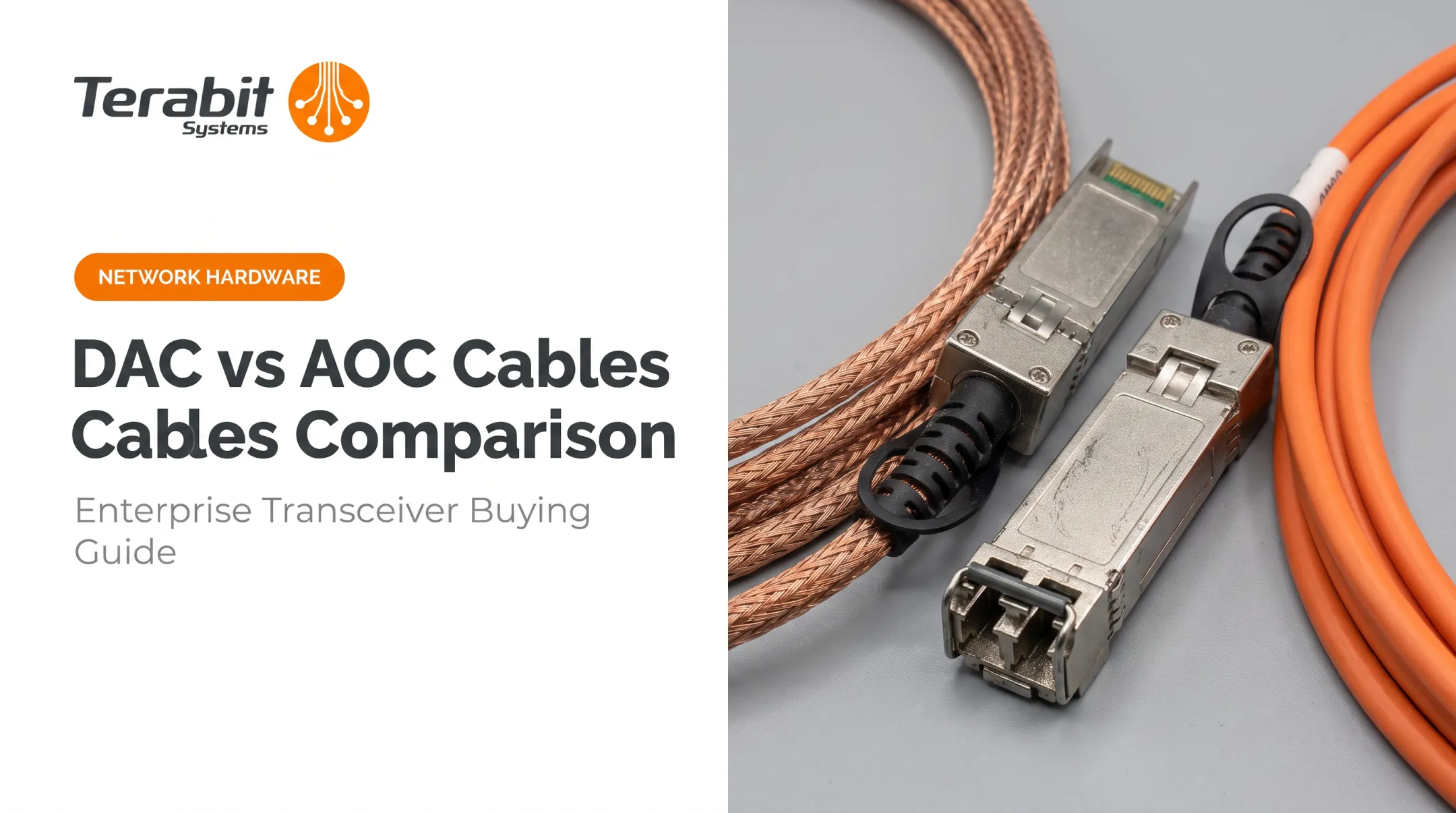

An AOC is a fiber-optic cable with transceivers permanently built into each end. It's not a raw fiber strand you have to pair with separate optics — it's a complete, ready-to-plug interconnect. This guide covers how AOCs work, how they stack up against DAC cables and standard transceiver-plus-patch-cord setups, and how IT buyers, ISPs, and cloud providers can source them without overspending.
If you're expanding network capacity on a tight budget, understanding where AOCs fit is worth the ten minutes it takes to read this.
Key Takeaways
- Fixed-length cables with built-in optical transceivers that convert electrical signals to light
- Short-to-medium reach (up to ~100m) with EMI immunity and lighter weight than copper
- Priced between DAC and transceiver-plus-patch-cord setups: more than copper, less than modular optics
- Refurbished or compatible AOCs cut hardware cost versus new OEM cabling
What Is an Active Optical Cable (AOC)?
An AOC is a cable assembly with optical transceivers permanently attached at both ends. Think of it as a patch cord with the connectors already built in: one validated unit instead of two separate optics modules plus a fiber jumper.
Broadcom describes standalone transceivers plus a separate optical cable as functionally equivalent, just split into more parts and more failure points.
How the Signal Conversion Works
Each end handles the same basic job:
- Electrical input arrives from the host device (switch, server, or storage array)
- A laser diode (typically an 850nm VCSEL) converts that signal into light
- Light travels through multimode fiber inside the cable
- A photodiode on the receiving end converts light back to an electrical signal

This electrical-to-optical-to-electrical process happens at both ends.
Common Form Factors
AOCs come in form factors that map directly to Ethernet speeds:
| Form Factor | Typical Speed |
|---|---|
| SFP+ | 10G |
| SFP28 | 25G |
| QSFP+ | 40G |
| QSFP28 | 100G |
| QSFP-DD / OSFP | 400G–800G |
Separate transceivers plus a fiber patch cable cost more and leave more room for error. Bundling both into one tested assembly lowers acquisition cost and removes a step where dust or misalignment can break the link.
How Do AOCs Work and Where Are They Used?
Active optical cables convert electrical signals to light at one end, send that light over fiber, then convert it back to electrical at the far end. Most AOCs use multimode VCSEL optics rather than singlemode lasers.
VCSELs cost less to manufacture and drive, so AOC pricing stays well below long-reach singlemode transceiver options. The trade-off is reach: multimode fiber can't match singlemode distance, but data centers rarely need that range.
Representative Speed and Reach Ranges
| Speed | Lanes | Fiber | Typical Reach |
|---|---|---|---|
| 10G (SFP+) | 1 | Multimode | Up to 20m |
| 25G (SFP28) | 1 | Multimode OM3/OM4 | 70m–100m |
| 100G (QSFP28) | 4 | Multimode OM3/OM4 | 70m–100m |
| 400G (QSFP112) | 4 | Multimode | Up to 100m (standard lengths often 1–30m) |
| 800G (OSFP) | 8 | Multimode | Typically 1–30m |

Where AOCs Get Deployed
Two locations dominate real-world use:
- Top-of-rack connections — linking servers directly to the rack switch
- Spine/leaf/core fabric interconnects — tying switching layers together within a row or between adjacent cabinets
The often-cited 100m theoretical maximum is a planning ceiling, not a guarantee. Higher-speed products, like many 800G OSFP AOCs, top out closer to 30m because of thermal and signal-integrity constraints at those lane rates. Always check the specific part's datasheet before assuming reach.
Breakout AOCs
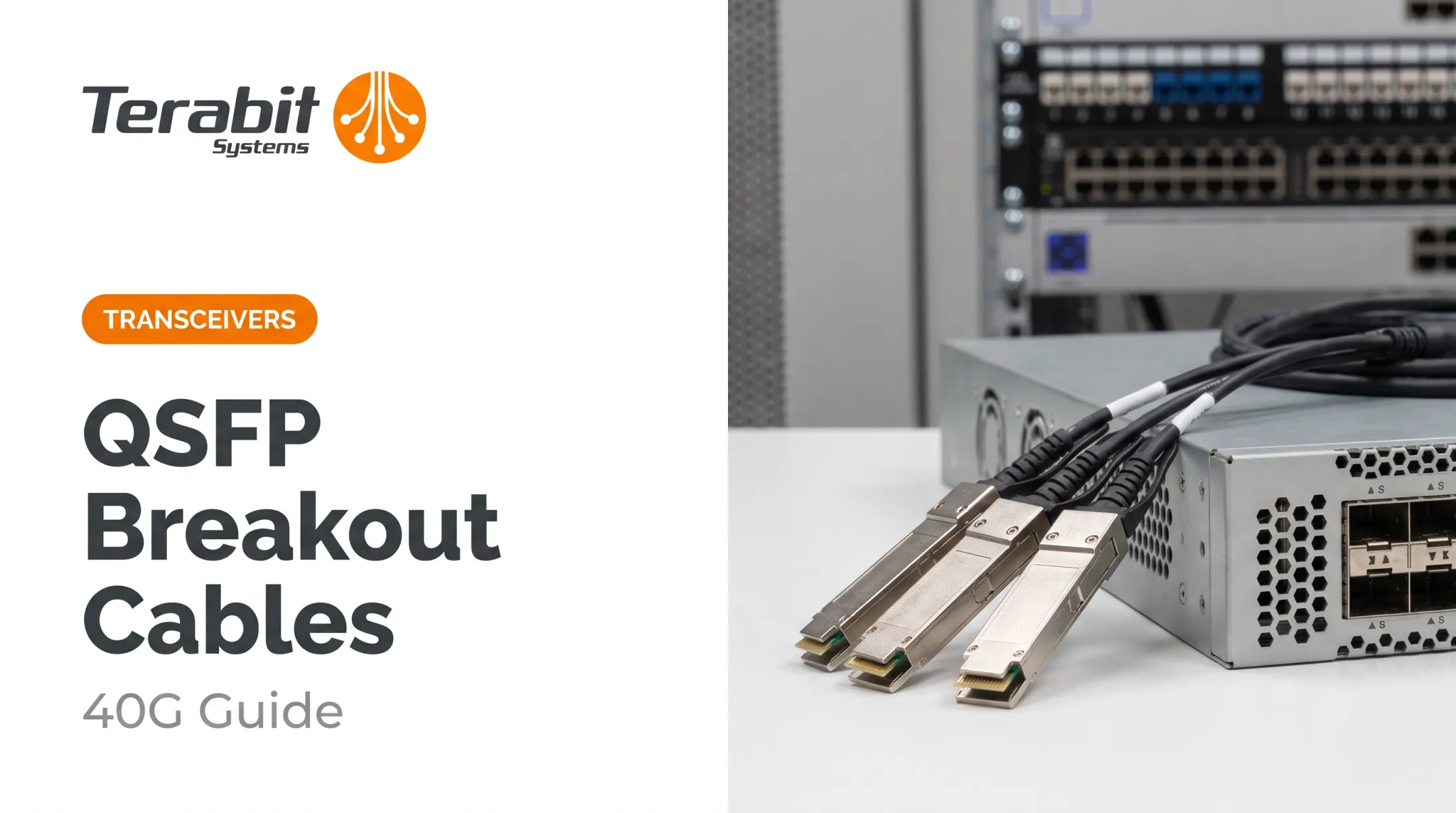
A single high-density port can split into multiple lower-speed connections through the cable itself. A QSFP28 (100G) end can break out into four SFP28 (25G) ends, letting one aggregation switch port feed four separate server or leaf connections without extra hardware. This only works if the switch software supports the specific breakout mode and lane mapping, so confirm compatibility before ordering.
AOC vs. DAC vs. Optical Transceivers: Key Differences
Choosing between these three options comes down to distance, budget, and flexibility.
AOC vs. DAC (Direct Attach Copper):
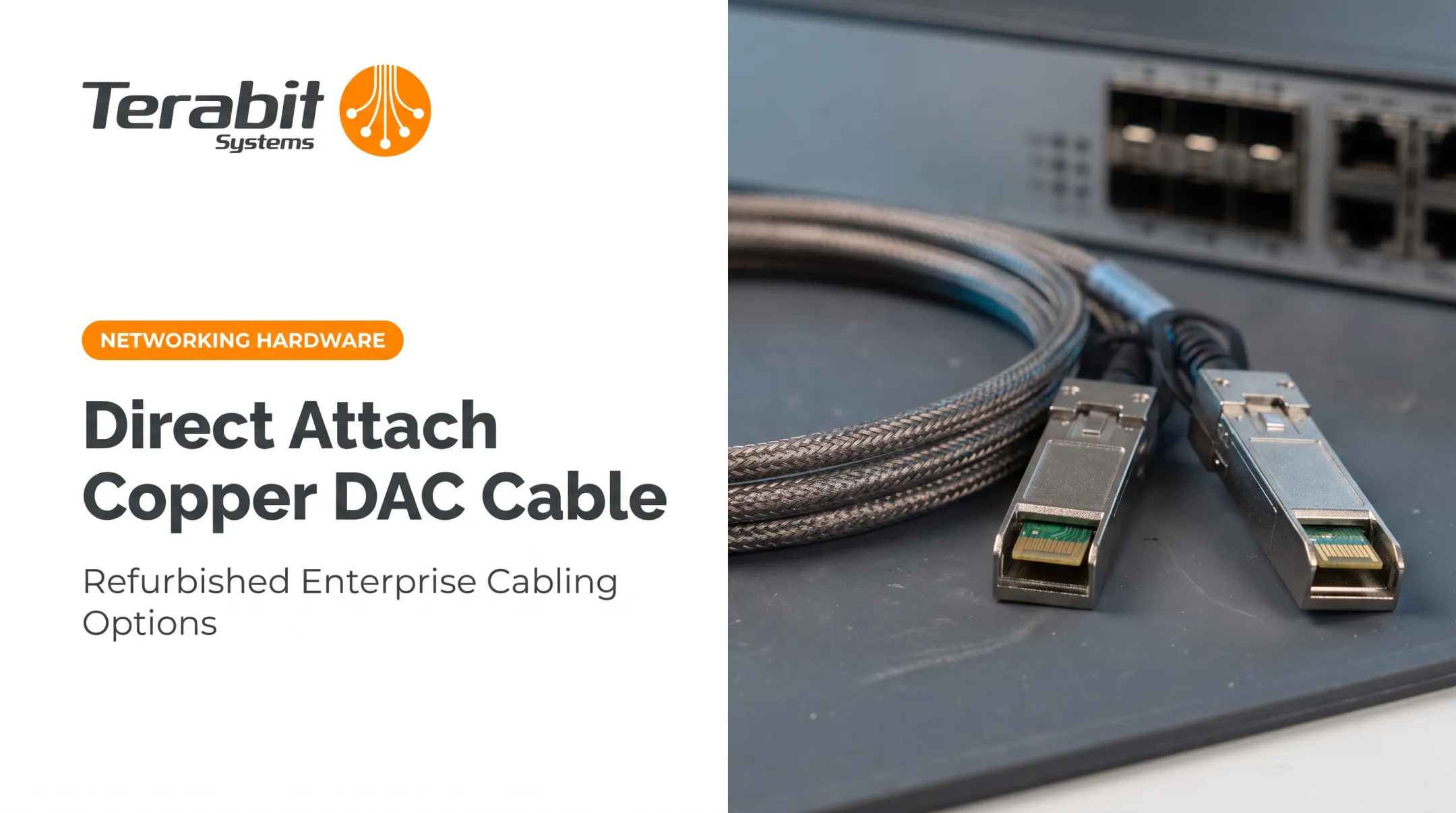
- DAC is copper-based, cheaper, and lower power, but effectively limited to under 10–15m
- AOC uses light instead of electrical signals, extending usable reach to roughly 70–100m
- At 100G, AOC ran about 2x the cost of DAC for a normalized 5-meter link, per Ethernet Alliance research presented at OFC 2016
- Power draw follows the same pattern: Cisco lists a 25G DAC at about 0.1 W versus about 1 W for a comparable 25G AOC
AOC vs. transceiver + patch cord:
- AOCs are fixed-length and less flexible once installed
- They eliminate connector contamination risk because the optics are sealed at the factory
- Installation is simpler: one cable, with no separate cleaning or mating of connectors
- The same OFC 2016 data placed modular optics plus fiber at roughly 8.5x the cost of DAC at 100G, well above AOC's 2x figure

Quick Decision Framework
- Choose DAC for very short, in-rack runs where cost and power matter most
- Choose AOC for medium-reach, fixed connections where flexibility isn't critical
- Choose transceivers + patch fiber when you need longer reach, mixed fiber types, or the ability to change lengths later
Common Applications of AOC Cables
AOCs show up wherever high bandwidth and fixed, known-length connections intersect:
- Data centers and HPC environments: server-to-switch, switch-to-switch, and storage links that need low latency and high density
- AV and HDMI installations: pro AV runs of HD video and audio over distances where copper loses signal
- Enterprise and cloud/ISP buildouts: cost-effective switching-fabric links within a row or cabinet set, without long-haul optics cost
The common thread: known endpoints, known distances, and a need for density without the bulk of copper.
Buying Considerations: How to Source Cost-Effective AOCs
Before buying an AOC, nail down three things:
- Required data rate — match the form factor (SFP28, QSFP28, OSFP, etc.) to your switch port and target speed
- Connector/port compatibility — confirm both ends match your equipment's physical interface
- Fixed-length accuracy — since AOCs can't be extended or shortened after manufacturing, measure your run before ordering
Watch for Vendor Lock-In
Many switches are coded to only recognize optics from the same OEM. This creates real friction in multi-vendor environments: a Juniper switch may reject a Cisco-coded AOC outright, even when the underlying hardware would otherwise work. Cisco, Arista, and Juniper all maintain their own compatibility matrices or hardware compatibility lists, and validating against them before purchase avoids costly returns later.
Where Refurbished AOCs Fit In
Quality-tested, compatible AOCs and transceivers from a specialist cost less than new OEM cabling. Terabit Systems works with equipment compatible with Arista, Juniper, Cisco, Extreme, and other major brands, backed by:
- Functional testing, including traffic passed through optical components before resale
- Physical inspection for connector and component damage
- A one-year warranty with replacement or refund if something goes wrong

If you're buying under budget pressure, a reseller that already knows OEM compatibility quirks can cut through vendor-lock-in guesswork.
Bulk orders are typically quote-based, so reach out directly for pricing on larger deployments.
Frequently Asked Questions
What is AOC in networking?
An AOC is a fiber-based cable with transceivers built into both ends, used to connect network devices at high speed over medium distances. It functions as a single, fixed-length interconnect rather than separate optics and fiber.
What is the difference between AOC and DAC cables?
AOC uses optical transmission for longer reach (up to roughly 100m) and higher speeds, while DAC uses copper and is limited to shorter runs (under 15m) but costs less and draws less power.
How far can an AOC cable transmit data?
Most AOCs run reliably between 1m and 100m, though the exact range depends on speed and vendor. High-speed 800G products often cap out closer to 30m.
Are AOC cables more expensive than DAC cables?
Generally, yes — AOCs cost more due to the embedded optics at each end. In exchange, they offer much longer reach and better cable management than copper DAC.
Can AOC cables be used between different equipment vendors?
Sometimes, but vendor coding can block compatibility even when hardware would otherwise work. Verified-compatible or refurbished AOCs from a specialist reseller reduce this risk.
What network speeds do AOC cables support?
AOCs cover a wide range, from 10G SFP+ cables up to 800G OSFP and QSFP-DD form factors, with 25G, 100G, and 400G variants covering most data center needs in between.